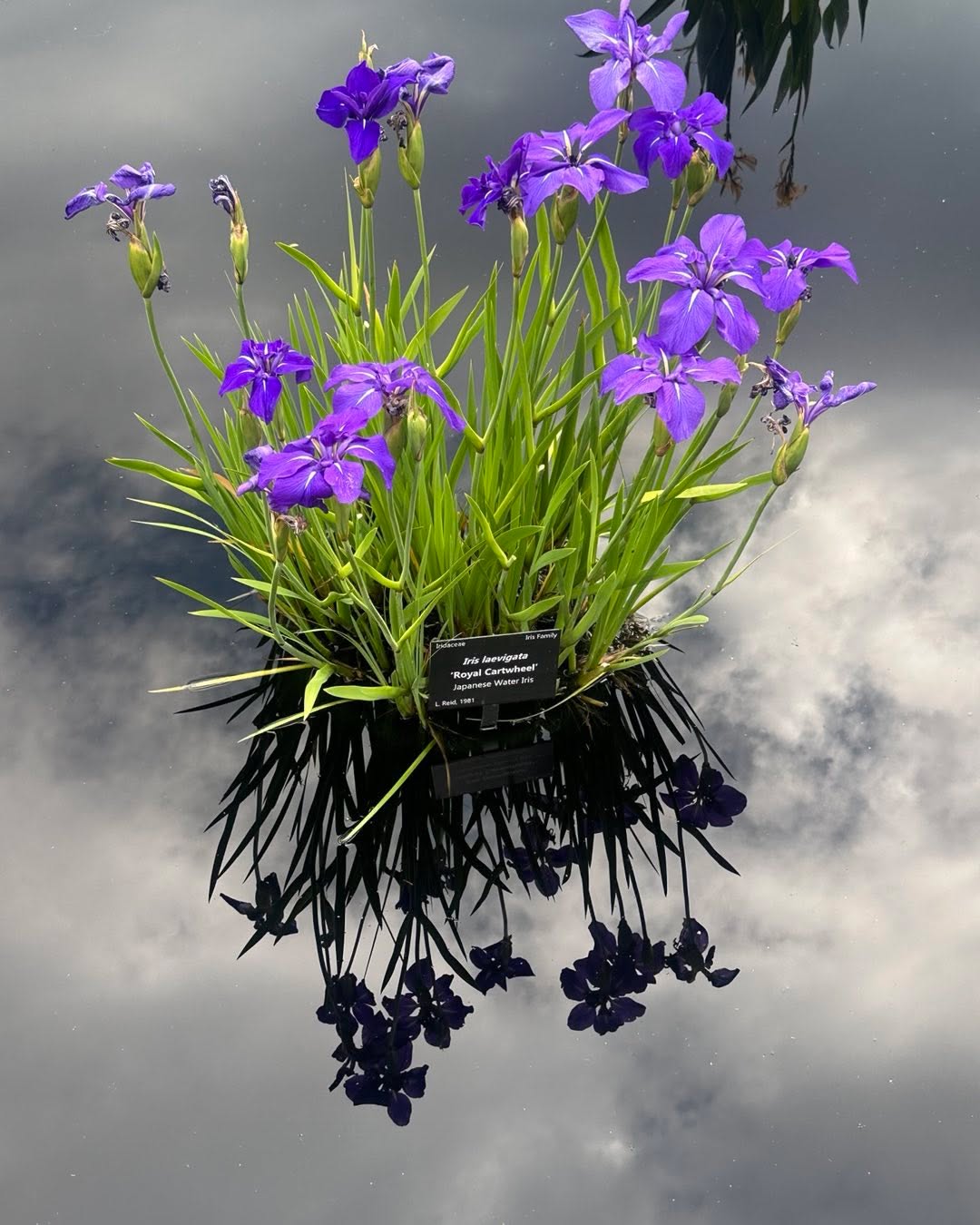
Royal Cartwheel Iris Description
Few marginal plants make a statement like the Royal Cartwheel Iris. Each royal blue-violet flower is split by a crisp white blaze down the center of every petal, opening in a flat, spinning "cartwheel" form above tidy clumps of sword-shaped green foliage. A true aquatic Japanese Water Iris (Iris laevigata) — not a land iris — it's built to thrive right at the water's edge, on a pond shelf, or in a bog garden. Vigorous, cold-hardy, and low-maintenance, it delivers weeks of bloom in late spring to early summer, often with a second flush later in the season.
Why You'll Love It
- Show-stopping blooms: 3–4 in. royal-blue flowers with bold white center stripes
- True water iris: happy standing in shallow water on a shelf or in a bog — not just damp soil
- Cold-hardy perennial: returns every year in USDA Zones 4–9
- Pollinator & wildlife magnet: loved by bees, butterflies, and dragonflies; shelters fish and frogs
- Natural filter: absorbs excess nutrients to help starve algae and keep pond water clearer
- Easy care: clump-forming, non-invasive, and beginner-friendly
Quick Facts
- Botanical name: Iris laevigata 'Royal Cartwheel'
- Common names: Japanese Water Iris, Rabbit-Ear Iris (Kakitsubata)
- Type: Hardy aquatic/marginal perennial (deciduous)
- Mature size: 2–3 ft tall (60–90 cm); spreads 1–2 ft
- Bloom time: Late spring–early summer; may rebloom in late summer/fall
- Light: Full sun to part shade (best bloom in 6+ hours of sun)
- Water depth: Moist soil to about 4 in. of water over the crown
- Hardiness: USDA Zones 4–9
- Habit: Clump-forming, non-aggressive
Planting & Care (USA) Position: Set the rhizome so the crown sits in moist soil up to about 3 inches (8 cm) of water over the top — a pond shelf, container, or bog edge is ideal. Full sun gives the heaviest bloom; light afternoon shade is fine in hot southern zones. Soil: Use a heavy loam or clay-based aquatic media in a no-hole pond basket. Avoid peat-based potting mixes (they float) and plain sand or gravel. This iris prefers a slightly acidic to neutral pH. Feeding: Press an aquatic plant fertilizer tab into the soil in spring and early summer for the strongest flowering. Top the basket with pea gravel to hold soil in place and deter koi. Winter: Foliage dies back after frost — just trim spent leaves. The hardy rhizome overwinters in the pond across Zones 4–9; in the coldest zones, keep the crown below the ice line. Dividing: Every 3–4 years in spring, lift and divide crowded clumps to keep blooms vigorous.
FAQ Is Royal Cartwheel a true pond plant? Yes. Unlike bearded irises, Iris laevigata is one of the most aquatic of all irises and thrives standing in shallow water. How deep should it be planted? Crown in moist soil up to about 4 inches of water over the top — perfect for a marginal shelf. Will it survive winter? Yes — it's a hardy perennial in USDA Zones 4–9 and returns each spring. Does it spread aggressively? No. It forms neat, expanding clumps rather than running invasively.
Bring living color and cleaner water to your pond's edge — add the Royal Cartwheel Iris to your water garden today.